Professional Pest Control vs DIY: Which One Should You Choose?
Seeing a cockroach in the kitchen, ants around the food, or a few mosquitoes inside the house can make you think, “I can handle this myself.” With so many pest control sprays, traps, powders, and home remedies available, DIY pest control can seem like the easiest option.
Sometimes, it is.
But when pests keep coming back, spread to different areas, or start causing property damage, professional treatment may be a more practical solution.
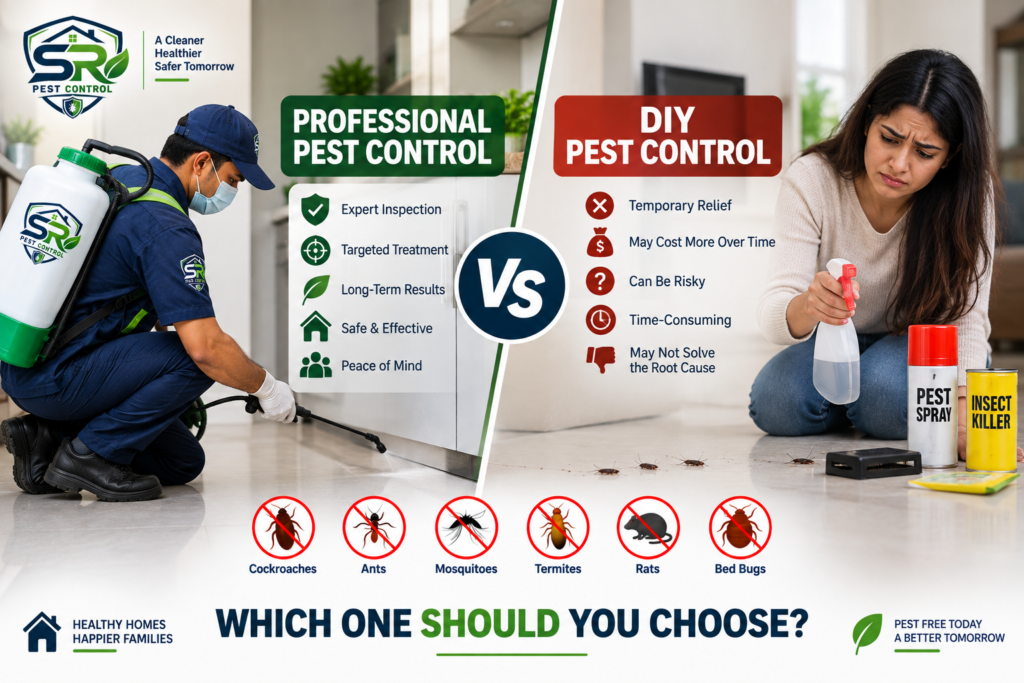
So, professional pest control vs DIY—which one should you choose?
The answer depends on the type of pest, the size of the infestation, how long the problem has existed, and what is causing it in the first place.
What Does DIY Pest Control Mean?
DIY, or “do it yourself,” pest control involves handling a pest problem without hiring a professional.
For example, you might use:
- Household pest sprays
- Ant or cockroach baits
- Mouse traps
- Mosquito repellents
- Sticky traps
- Cleaning and sanitation
- Sealing gaps and cracks
- Home-based prevention methods
DIY methods can be useful when you notice an occasional pest and there are no signs of a larger infestation.
For example, if a few ants appear near your kitchen window, cleaning the area and removing their access to food may solve the problem.
However, things can become different when pests are hiding inside walls, furniture, drains, ceilings, mattresses, or other difficult-to-reach places.
When DIY Pest Control Can Make Sense
Not every pest problem requires professional treatment.
DIY methods may be suitable for minor and easily identifiable problems.
1. You Have a Small Infestation
If you occasionally see one or two ants or mosquitoes, basic cleaning and preventive measures may be enough.
The key is to keep watching the situation. If the number of pests increases or they keep appearing after your efforts, the problem may require further attention.
2. You Can Identify the Source
Sometimes the cause is obvious.
For example, stagnant water may attract mosquitoes, while uncovered food can attract ants and cockroaches.
Removing the source can reduce pest activity without requiring extensive treatment.
3. You Are Focusing on Prevention
DIY methods are particularly useful for everyday prevention.
Keeping food sealed, cleaning spills quickly, removing standing water, maintaining dry storage areas, and sealing entry points can all help make your property less attractive to pests.
When Professional Pest Control Makes More Sense
There are situations where repeatedly trying DIY solutions may not solve the underlying problem.
1. The Infestation Keeps Coming Back
You spray the cockroaches today, but they return a few days later.
You remove the ants from one area, but they appear somewhere else.
This can happen because treating the visible pests does not necessarily address where they are coming from.
A professional inspection can help identify areas that may need attention.
2. You Are Dealing With Termites
Termites deserve particular attention because the damage may continue even when you cannot see active termites.
They can affect wooden furniture, doors, flooring, and other parts of a property.
If you notice signs of termite activity, getting professional advice early can help you understand the extent of the problem and possible treatment options.
3. Bed Bugs Are Spreading
Bed bugs can hide in mattresses, furniture, cracks, and other concealed areas.
Finding one bed bug does not necessarily mean there is only one. If bites or other signs continue despite household treatments, professional pest control may be worth considering.
4. Rodents Are Entering Your Property
Rats and mice can create problems beyond simply being unpleasant to see. They may enter kitchens, storage rooms, warehouses, and other areas looking for food and shelter.
If you repeatedly notice droppings, gnaw marks, unusual sounds, or damaged food packaging, it is important to investigate how they are getting inside.
5. The Problem Is Affecting Your Business
For restaurants, offices, shops, warehouses, and other commercial properties, pest problems can become particularly disruptive.
Businesses may need a more systematic approach to pest management rather than repeatedly treating individual pests when they appear.
Professional Pest Control vs DIY: What’s the Difference?
The biggest difference is the approach.
With DIY pest control, you usually respond to what you can see.
Professional pest control generally involves looking at the wider problem—including possible entry points, hiding areas, environmental conditions, and the type of infestation.
A professional may also recommend preventive steps after treatment so that the same conditions do not continue attracting pests.
What About Cost?
DIY pest control usually has a lower upfront cost. A spray or trap may cost much less than hiring a professional.
However, price alone does not tell the whole story.
If you repeatedly purchase products without solving the underlying issue, the total cost can increase over time. You also spend your own time cleaning, treating, monitoring, and repeating the process.
Professional treatment involves an initial service cost, but it may be more appropriate when the infestation is established or difficult to locate.
The right choice should therefore consider the severity of the problem and the likelihood of recurrence, not just the price of one treatment.
Safety Should Also Be Considered
Another important factor is how pest control products are used.
Using any chemical product incorrectly can create unnecessary risks. Always read the product label and follow its instructions.
Professional pest control providers can explain the treatment process and any precautions that should be followed before, during, or after service.
If you are unsure about a product or treatment, asking a qualified professional is better than experimenting with different chemicals.
DIY and Professional Pest Control Can Work Together
It does not always have to be one or the other.
In fact, the most practical approach can involve both.
Professional treatment can address an existing infestation, while your daily habits can help prevent the conditions that attracted pests in the first place.
For example:
Professional treatment: Address an established cockroach infestation.
Your responsibility: Keep food stored properly, clean kitchen surfaces, manage waste, and reduce moisture.
Similarly, professional termite treatment can be supported by regular inspections and attention to moisture and wood-related issues around the property.
A Simple Way to Decide
Ask yourself these questions:
Is the problem minor?
If yes, you may be able to start with basic DIY prevention.
Are pests appearing repeatedly?
If yes, there may be an underlying issue that needs investigation.
Are you dealing with termites, bed bugs, or rodents?
These problems can be difficult to manage effectively without understanding where the pests are hiding or entering.
Is the infestation spreading?
If pests are appearing in multiple rooms or areas, professional assistance may be appropriate.
Have DIY methods already failed?
If you have tried several approaches and the problem continues, repeating the same method may not produce a different result.
Choosing Professional Pest Control in Visakhapatnam
For homeowners and businesses dealing with recurring pest problems, choosing an experienced local service provider can make the process easier.
SR Pest Control provides pest control solutions for common problems such as cockroaches, termites, mosquitoes, bed bugs, rodents, ants, lizards, and spiders.
Before booking any service, ask about the pest being treated, the treatment process, safety precautions, preparation requirements, and follow-up support.
You can learn more about available services through the SR Pest Control services page.
Final Thoughts
DIY pest control can be perfectly reasonable for small, manageable pest problems. Simple habits such as keeping your home clean, storing food properly, removing stagnant water, and sealing entry points can go a long way.
However, persistent or widespread infestations are a different situation. When pests keep returning or hiding in places you cannot easily access, professional inspection and treatment may provide a more systematic way to address the problem.
Ultimately, the choice between professional pest control vs DIY depends on the pest, severity of the infestation, property type, and whether your current efforts are actually solving the problem.
The goal is not simply to get rid of the pests you can see today. It is to understand why they are there and how to reduce the chances of them coming back.