How to Identify Termites Before They Damage Your Property
Termites are among the most troublesome pests a property owner can face. The biggest problem is that they often remain hidden for months, quietly damaging wooden furniture, doors, flooring, and other parts of a building before anyone notices.
You might see a small patch of damaged wood or notice a few tiny insects near a window and assume it is nothing serious. Unfortunately, these small signs can sometimes indicate a larger termite problem.
The good news is that identifying termites early can help you take action before the damage becomes more extensive.
Whether you own a house, apartment, office, or commercial property, knowing what to look for can make a real difference. Here are the common warning signs of termite activity and what you should do if you find them.
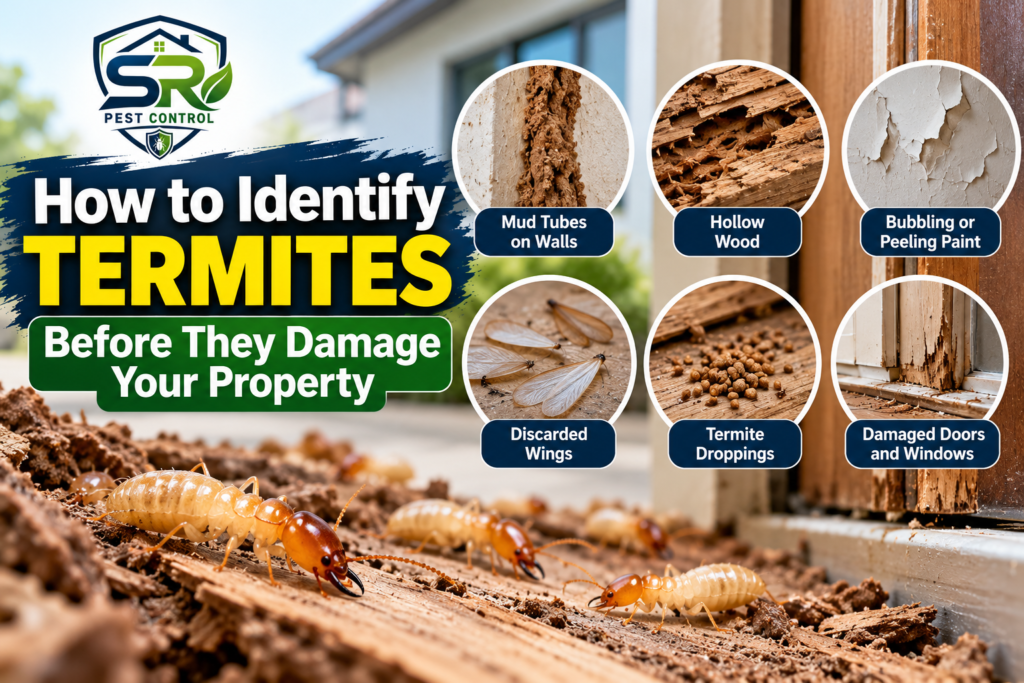
1. Look for Hollow-Sounding Wood
One of the common signs of termite damage is wood that sounds hollow when gently tapped.
Termites feed on cellulose, a material found in wood and other plant-based materials. As they consume the inside of wooden structures, they can leave the outer surface looking relatively normal.
You may notice this in:
- Wooden doors and door frames
- Window frames
- Cupboards and wardrobes
- Wooden flooring
- Furniture
- Skirting boards
If a wooden surface sounds unusually hollow, feels weak, or appears damaged, it is worth investigating further.
However, hollow-sounding wood does not always mean termites are present. Other forms of deterioration can produce similar signs.
2. Check for Mud Tubes on Walls
Mud tubes are one of the most recognizable signs of subterranean termite activity.
These narrow, tube-like structures are made from soil and other materials. Termites use them to travel between their colony and food sources while protecting themselves from open air and drying conditions.
You may find mud tubes along:
- Foundation walls
- Wall corners
- Building foundations
- Wooden beams
- Areas near plumbing
- External walls and concealed spaces
If you notice thin, mud-like lines running along a wall or foundation, do not immediately scrape them away and assume the problem is solved.
They may indicate termite activity that requires further inspection.
3. Notice Paint That Bubbles or Peels
Sometimes termite damage is not immediately visible because the insects are hidden behind the surface.
You may notice paint that appears blistered, uneven, or swollen. In certain cases, damage behind the paint can resemble moisture damage.
However, peeling paint can also result from dampness, poor surface preparation, or other building issues.
If the paint changes are accompanied by hollow wood, mud tubes, or other signs of termite activity, the area should be inspected more closely.
4. Watch for Discarded Wings Near Windows
Some termites develop into winged reproductive adults, often called swarmers or alates. Under suitable conditions, they leave their colonies to establish new ones.
After swarming, these insects may shed their wings.
You might find small, similar-looking wings near:
- Windowsills
- Doors
- Balcony areas
- Light fixtures
- Ventilation openings
- Indoor corners
Finding discarded wings indoors can be a warning sign that termites may be present nearby.
Still, wings alone cannot confirm an active infestation inside the building. Other flying insects can also shed their wings, so the surrounding evidence matters.
5. Look for Small Holes and Damaged Wood
Termite activity can sometimes leave visible holes, damaged surfaces, or weakened sections of wood.
Inspect wooden furniture, door frames, shelves, and other wooden structures if you notice unusual deterioration.
Depending on the termite species, damage may be hidden beneath the surface or visible externally.
Do not assume that every small hole is caused by termites. Wood-boring beetles and other causes can produce similar damage.
If you notice several signs together, consider getting a professional assessment.
6. Check for Doors and Windows That Suddenly Stick
Have you noticed a wooden door becoming difficult to close or a window frame becoming unusually tight?
Swelling caused by moisture is a common explanation, but termite damage may also affect wooden components.
Termites can weaken or damage wood, while moisture can cause it to expand or distort.
If doors and windows suddenly become difficult to operate, inspect the surrounding wood for other signs, such as hollow areas, mud tubes, or surface damage.
It is important to identify the actual cause rather than assuming that termites are responsible.
7. Look for Termite Droppings
Some drywood termite species produce small, hard, pellet-like droppings known as frass.
These may accumulate beneath small openings in infested wood or near affected furniture.
The pellets can look like tiny grains, and their colour may vary depending on the wood being consumed.
Not all termite species leave visible pellets in the same way. Subterranean termites, for example, commonly use mud tubes and may leave different signs.
If you notice unexplained pellets near wooden furniture, an inspection can help determine whether they are associated with termites or another source.
8. Pay Attention to Swarming Termites
Winged termites may appear in groups during periods when environmental conditions are suitable for swarming.
You may notice several flying insects gathering around lights or windows, sometimes with discarded wings nearby.
Swarming does not necessarily mean the entire building is infested. However, repeated termite-like swarms inside a property deserve attention.
Avoid identifying insects based on wings alone. Flying ants can look similar to winged termites, so checking other features or obtaining professional identification may be helpful.
Why Early Termite Detection Matters
Termites can remain hidden while continuing to damage suitable materials.
By the time visible damage becomes obvious, the affected area may be more extensive than it first appears.
Early identification can help property owners:
- Investigate suspected termite activity sooner
- Reduce the risk of further structural or furniture damage
- Identify potential moisture-related issues
- Understand which areas require treatment
- Plan suitable preventive measures
Not every warning sign means you have termites, but it is better to investigate suspicious damage than to ignore it.
Where Should You Look for Termites at Home?
You do not need to dismantle your furniture or damage your walls to check for warning signs.
Start with a visual inspection of accessible areas.
Wooden Furniture
Check wardrobes, cupboards, bed frames, shelves, and other wooden items for unusual damage or hollow areas.
Doors and Windows
Look around wooden frames, especially near the floor or areas where moisture may accumulate.
Walls and Foundations
Inspect accessible corners and foundation areas for mud tubes or other unusual structures.
Bathrooms and Kitchens
Pay attention to areas near plumbing, where persistent moisture may contribute to building problems.
Storage Areas
Check stored wooden items and cardboard materials, particularly if the area is damp or poorly ventilated.
If you suspect an infestation, avoid breaking apart structural wood or opening walls yourself just to confirm it.
What Should You Do If You Find Termites?
If you notice one or more possible signs of termite activity, take a few sensible steps.
1. Avoid disturbing the suspected area. Keep the evidence intact where possible so it can be assessed.
2. Take photographs. Clear pictures of mud tubes, damaged wood, discarded wings, or other signs may be useful for documenting the issue.
3. Check for moisture problems. Repair leaks and investigate persistent dampness, while remembering that moisture alone does not confirm termites.
4. Arrange an inspection. A qualified pest control professional can assess the signs and help identify the likely cause.
5. Ask about treatment options. The appropriate approach depends on the termite species, infestation location, building structure, and extent of the damage.
Avoid relying on ordinary household insect sprays to resolve a suspected termite infestation. They may kill exposed insects without addressing the colony or the full extent of the problem.
Can You Prevent Termites From Damaging Your Property?
Although no preventive measure can guarantee that termites will never enter a building, a few practices can help reduce risk.
- Repair leaking taps and pipes promptly.
- Keep the area around your property well drained.
- Avoid allowing untreated wood to remain in prolonged contact with soil.
- Keep stored timber away from damp areas where practical.
- Inspect wooden structures periodically.
- Address moisture problems around foundations and walls.
- Investigate suspicious damage early.
If your property has previously experienced termite activity, ask a pest control professional whether periodic inspections or preventive treatment would be appropriate.
Professional Termite Control in Visakhapatnam
If you have noticed mud tubes, damaged wood, discarded wings, or other possible signs of termites, arranging a professional inspection can help you understand the situation before the damage becomes more extensive.
SR Pest Control provides pest control services for residential and commercial properties in Visakhapatnam, including termite control and other pest management services.
You can explore the available services here:
Termite & Pest Control Services in Visakhapatnam – SR Pest Control
For enquiries, contact +91 9121835368.
When contacting a pest control provider, explain what you have noticed, where the signs appear, and whether the damage seems to be increasing. This information can help the team understand your concern and arrange the appropriate assessment.
Final Thoughts
Termites can be difficult to identify because much of their activity happens out of sight. However, signs such as hollow-sounding wood, mud tubes, discarded wings, unexplained wood damage, and termite droppings can help alert you to a possible problem.
Remember that no single sign always confirms termites. Moisture, other insects, and ordinary wear can cause similar changes.
The most important thing is to notice unusual changes early, investigate the cause, and seek professional advice when termite activity is suspected.
Taking action at the first warning signs can help you protect your property and avoid leaving a potentially serious problem unnoticed for too long.