Termite Control in Visakhapatnam: Complete Homeowner’s Guide
Termites can cause serious problems for homeowners because they often damage wooden structures long before their presence becomes obvious. A wooden door may start looking weak, a cupboard may develop unusual damage, or you may notice mud-like lines running along a wall. These small signs can sometimes indicate a termite problem that needs attention.
For homeowners looking for termite control in Visakhapatnam, understanding how termites enter properties, how to identify an infestation, and when to seek professional help can make a big difference.
Whether you live in an independent house or an apartment, this guide explains the common warning signs, prevention methods, treatment options, and practical steps you can take to protect your property.
What Are Termites and Why Are They a Problem?
Termites are insects that feed on cellulose, a material found in wood and other plant-based products. Depending on the species, they may attack wooden furniture, door frames, flooring, structural timber, and other materials containing cellulose.
The main concern is that termite activity can remain hidden. Some termites consume wood from the inside, leaving the outer surface looking relatively normal until the damage becomes noticeable.
If the infestation is left untreated, the damage can become more extensive and potentially expensive to repair.
Why Do Homes in Visakhapatnam Need Termite Protection?
Termite activity depends on several factors, including the species present, moisture conditions, building design, construction materials, and access to suitable food sources.
In Visakhapatnam, homeowners should pay attention to property maintenance, particularly in areas affected by persistent dampness or plumbing leaks.
Common conditions that may increase the risk of termite activity include:
- Moisture around foundations and walls
- Leaking taps or plumbing pipes
- Wooden materials in contact with soil
- Poor drainage around the property
- Untreated timber or stored wood
- Cracks and gaps that provide access to concealed areas
These conditions do not guarantee a termite infestation, but addressing them can help reduce potential risks.
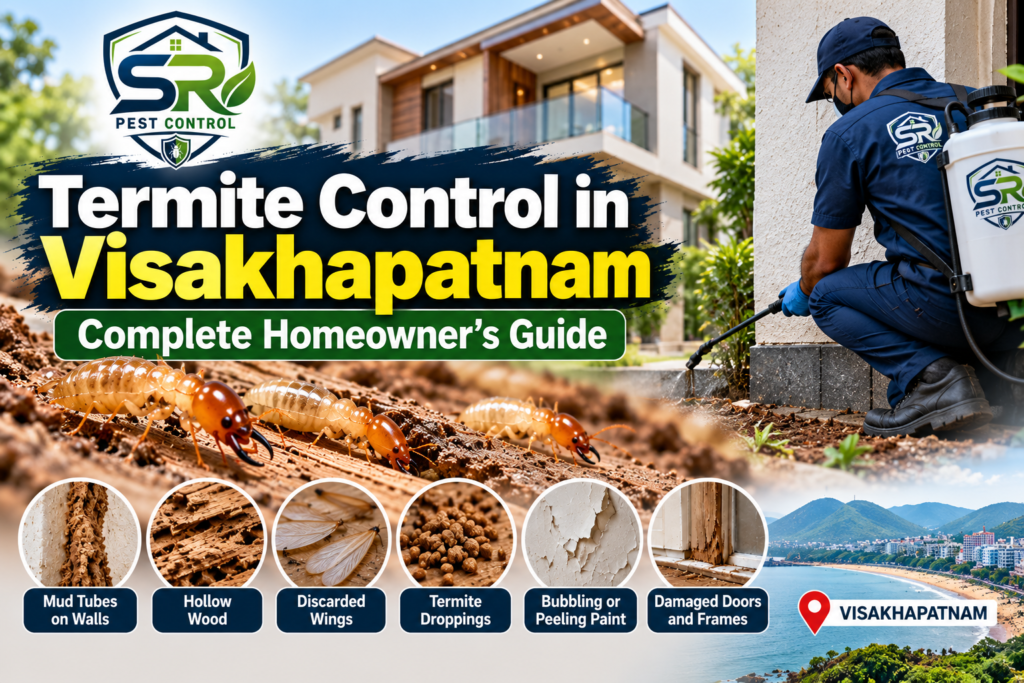
7 Warning Signs of Termites in Your Home
Recognizing termite activity early can help you arrange an inspection before the damage becomes more extensive.
1. Hollow-Sounding Wood
Gently tapping wooden doors, cupboards, or other furniture may reveal areas that sound hollow or feel unusually weak.
Termites can consume the inside of wood while leaving parts of the outer surface intact.
If you notice unexplained damage, consider having the affected area inspected.
2. Mud Tubes on Walls
Some termites build narrow mud tubes to travel between their colony and food sources while protecting themselves from drying conditions.
These tubes may appear along walls, foundations, wooden structures, or areas near plumbing.
If you discover mud-like lines running along a wall, avoid assuming they are harmless dirt marks.
3. Discarded Wings Near Windows
Winged termites, also called swarmers, may leave their colonies to establish new ones. After swarming, they often shed their wings.
You may find small discarded wings near windows, doors, or light sources.
Although other insects can leave similar signs, repeated findings of wings alongside damaged wood or mud tubes deserve further investigation.
4. Damaged Wooden Doors and Frames
Termite damage may affect door frames, window frames, cupboards, skirting boards, and other wooden components.
Look for unusual holes, weakened sections, blistered surfaces, or wood that appears damaged beneath the paint.
Moisture and other wood-damaging pests can cause similar symptoms, so an inspection may be needed to identify the actual cause.
5. Bubbling or Peeling Paint
Paint that appears swollen or blistered can sometimes indicate damage or moisture behind the surface.
This sign alone does not confirm termites, but it is worth investigating when it appears alongside other warning signs.
6. Termite Droppings
Certain drywood termites produce small, hard pellets that may accumulate near affected wood.
If you find unexplained pellet-like material beneath wooden furniture or near small holes, it may be useful to have the area checked.
7. Repeated Signs of Damage
If wooden items continue to weaken or new signs appear in different areas, do not simply repaint or replace the visible surface without investigating the cause.
A professional inspection can help determine whether termites or another issue is responsible.
What Types of Termite Control Are Available?
The appropriate treatment depends on the termite species, the location of the infestation, the building structure, and the extent of the damage.
There is no single treatment that suits every property.
1. Soil Treatment
For certain subterranean termite infestations, professional soil treatment may be used to help protect the building and manage termite activity.
The exact approach depends on the construction, infestation, and treatment system selected.
2. Wood Treatment
Suitable wood treatments may be used in certain situations to address termite activity in accessible wooden materials.
However, treating only the visible surface may not be sufficient when termites are concealed deeper inside the wood or elsewhere in the property.
3. Baiting Systems
Some termite management programmes use baiting systems designed to be discovered and consumed by termites.
These systems require appropriate placement and monitoring. Results depend on the termite species, colony activity, and the system used.
4. Targeted Professional Treatment
When termite activity is detected in a specific area, a professional may recommend a targeted treatment based on the findings of the inspection.
The provider should explain what the treatment covers, its limitations, and whether monitoring or follow-up is needed.
Why DIY Termite Treatment May Not Be Enough
When homeowners discover termites, their first instinct may be to purchase a spray and treat the affected area themselves.
Although some products may kill exposed insects, that does not necessarily eliminate the underlying infestation.
Termites may be hidden inside wood, behind walls, beneath flooring, or in areas that are difficult to access.
DIY treatment can be especially limited when the infestation affects structural components or extends beyond the visibly damaged area.
If you suspect termites, avoid damaging structural wood to investigate the problem yourself. A professional assessment can help establish the extent of the activity and identify suitable treatment options.
How to Choose a Termite Control Company in Visakhapatnam
Choosing the right pest control provider is important because termite treatment can involve different methods depending on the property.
Before booking a service, consider the following factors.
Check Relevant Experience
Ask whether the company has experience handling termite infestations in properties similar to yours.
Request an Inspection
An assessment can help identify possible termite activity, affected areas, and the likely extent of the problem.
Understand the Recommended Treatment
The provider should explain the proposed method and why it is suitable for your situation.
Ask About Safety
Ask what precautions are needed before, during, and after treatment, particularly if children, pets, or elderly family members live at the property.
Confirm the Cost
Understand what is included in the quotation, including inspection, treatment, monitoring, and any follow-up visits.
Ask About Follow-Up Support
Some termite problems require monitoring or additional treatment. Clarify the provider’s policy before making a decision.
8 Practical Ways to Help Prevent Termites
Professional treatment can address an existing infestation, but regular property maintenance also matters.
Here are some useful preventive measures.
- Repair plumbing leaks: Persistent moisture can contribute to conditions that support certain termite species.
- Improve drainage: Avoid allowing water to collect around the building.
- Protect wooden materials: Where practical, avoid direct contact between untreated wood and soil.
- Inspect wooden furniture: Periodically check doors, cupboards, frames, and other wooden components.
- Seal suitable gaps: Repair cracks and openings where appropriate, while recognizing that sealing alone does not eliminate an established infestation.
- Store timber carefully: Keep stored wood away from damp areas and inspect it periodically.
- Address dampness: Investigate persistent moisture around walls, floors, and foundations.
- Arrange inspections when needed: If you have noticed warning signs or experienced termite problems before, ask a professional whether periodic inspection is appropriate.
These measures can help reduce risk, but they cannot guarantee that termites will never enter your property.
How Much Does Termite Control Cost in Visakhapatnam?
The cost of termite control varies from one property to another. Factors that can influence the quotation include:
- Size and type of property
- Termite species
- Extent of the infestation
- Accessibility of affected areas
- Treatment method required
- Whether the work involves existing damage or preventive treatment
- Need for monitoring or follow-up visits
For this reason, it is better to request a property-specific quotation instead of relying on a single advertised price.
Before booking, ask the provider to explain what the quoted amount covers and whether any additional charges may apply.
When Should You Arrange Professional Termite Inspection?
Do not wait until wooden furniture or structural components become severely damaged.
Consider arranging an inspection if you notice:
- Mud tubes along walls or foundations
- Hollow or weakened wooden structures
- Discarded wings near windows or doors
- Unexplained damage to door frames or cupboards
- Repeated signs of termite activity
- Suspicious damage in several areas of the property
An inspection can help establish whether termites are present and what action may be appropriate.
Professional Termite Control in Visakhapatnam
If you suspect termite activity in your home, office, or commercial property, professional guidance can help you understand the treatment options available.
SR Pest Control provides pest control services for residential and commercial properties in Visakhapatnam, including termite control and other pest management services.
Explore the available services here:
Termite & Pest Control Services in Visakhapatnam – SR Pest Control
For enquiries, contact +91 9121835368.
When contacting the team, explain where you noticed the damage, how long it has been present, and whether you have seen mud tubes or discarded wings. These details can help the provider understand your concerns before arranging an inspection.
Frequently Asked Questions
1. How do I know if my house has termites?
Look for possible warning signs such as mud tubes, hollow-sounding wood, discarded wings, damaged wooden structures, or termite droppings. An inspection may be necessary to confirm the cause.
2. Can termites damage a house without being visible?
Yes. Some termites remain hidden inside wood, behind walls, or in other concealed areas, so damage may develop before the insects are noticed.
3. Is termite treatment necessary for every wooden item?
No. The appropriate action depends on whether termites are present, the affected material, and the extent of the problem. An assessment can help determine what needs treatment.
4. How long does termite treatment take?
The time required depends on the property, treatment method, infestation, and accessibility of the affected areas. Ask the service provider for an estimate specific to your property.
5. Can termites return after treatment?
Termite activity can recur if the original problem is not fully addressed or new termites enter the property. Follow-up monitoring and preventive measures may be recommended depending on the treatment.
Final Thoughts
Termites can be difficult to manage because they often remain hidden while damaging wooden materials. Recognizing the early warning signs, addressing moisture problems, maintaining your property, and arranging a professional inspection when necessary can help you respond before the damage becomes more extensive.
If you are looking for termite control in Visakhapatnam, compare providers based on their experience, inspection process, treatment recommendations, safety precautions, pricing, and follow-up support.
Taking action early can help you understand the problem, protect your property, and make a more informed decision about the right termite management approach.