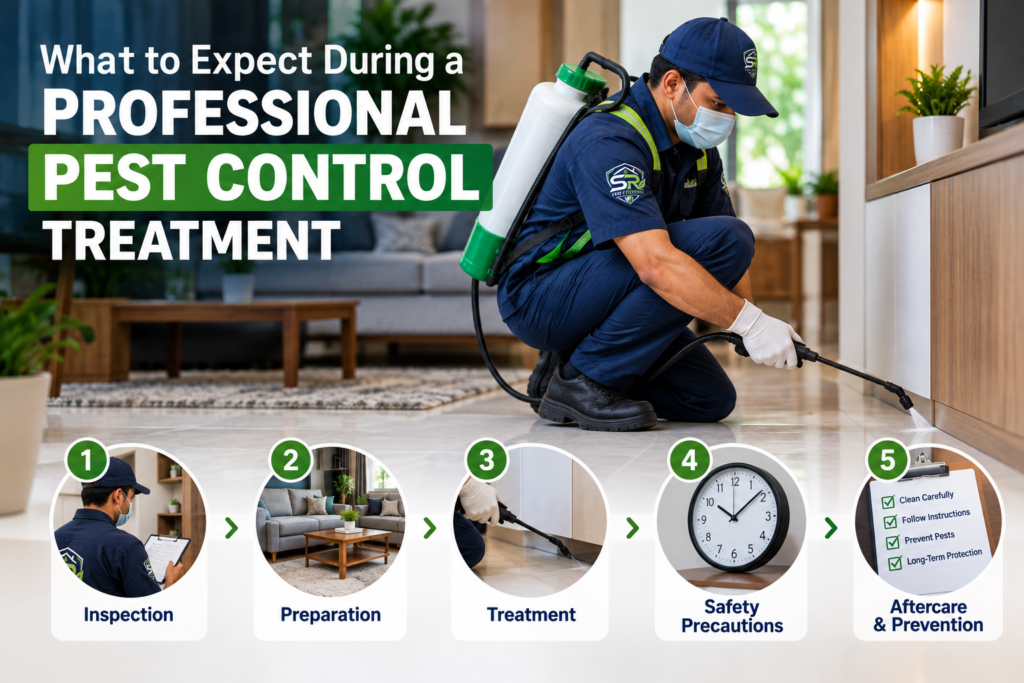
What to Expect During a Professional Pest Control Treatment
Booking professional pest control for the first time can leave you with a lot of questions.
Do you need to leave the house? Should you move your furniture? How long will the treatment take? When can you clean the treated areas? And what happens after the technician leaves?
Knowing what to expect can make the entire process much easier.
Whether you are dealing with cockroaches, termites, mosquitoes, ants, bed bugs, rodents, or another common pest problem, the exact treatment can vary depending on the pest and the property. However, most professional pest control treatments follow a basic process.
Here is what you can expect before, during, and after a professional pest control service.
1. The Process Usually Starts With an Inspection
Before treatment begins, the technician may inspect the property to understand the pest problem.
They may look at areas such as:
- Kitchen and food storage areas
- Bathrooms
- Bedrooms
- Drains and moisture-prone areas
- Cracks and gaps
- Doors and windows
- Storage spaces
- Furniture and concealed areas
- Gardens or outdoor areas
The purpose of an inspection is to understand where pest activity is occurring and what may be attracting or allowing pests to enter the property.
For some infestations, identifying the source can be just as important as treating the pests that are visible.
2. The Technician Explains the Treatment
Once the problem has been assessed, the technician should explain the proposed treatment.
This is a good time to ask questions if anything is unclear.
You can ask:
- What pest is being treated?
- Which areas will be treated?
- How long will the service take?
- Do I need to leave the property?
- What preparation is required?
- What precautions should I follow afterward?
- Will another treatment or follow-up be required?
Understanding the process beforehand helps avoid surprises.
3. You May Need to Prepare the Property
Depending on the type of treatment, you may be asked to make some preparations before the technician starts.
For example, you may need to:
- Store food properly
- Clear access to walls and corners
- Cover or store certain household items
- Remove unnecessary clutter
- Keep children and pets away from treatment areas
- Follow any specific instructions provided by the pest control professional
The preparation required can vary significantly between different pest problems.
For example, a cockroach treatment may require different preparation from a bed bug or termite treatment.
4. The Treatment Begins
After the inspection and preparation, the technician will carry out the treatment using the method appropriate for the pest problem.
Depending on the situation, professional pest control may involve targeted application, baiting, traps, or other pest management techniques.
The treatment area may include specific rooms, cracks, corners, entry points, or other locations where pest activity has been identified.
A professional treatment is generally more focused than simply spraying every visible surface.
5. The Treatment May Take Some Time
The duration of a pest control visit depends on several factors.
These can include:
- Size of the property
- Type of pest
- Level of infestation
- Number of rooms
- Treatment method
- Accessibility of affected areas
- Residential or commercial property type
A small residential treatment may take considerably less time than treating a large commercial property.
It is therefore better to ask the service provider for an estimated treatment duration rather than assuming every pest control visit will take the same amount of time.
6. You May Need to Stay Away From Treated Areas
Depending on the treatment method and product being used, the technician may recommend keeping people and pets away from certain areas for a specified period.
Follow the instructions provided by the pest control professional.
Do not assume that an area is ready to use simply because the treatment appears finished.
If you have children, pets, elderly family members, or anyone with particular sensitivities at home, mention this to the service provider before treatment so appropriate precautions can be discussed.
7. Don’t Expect Every Pest to Disappear Immediately
One common misconception is that professional pest control means every pest will disappear immediately after one visit.
The outcome can depend on the type of pest, the severity of the infestation, the treatment method, and conditions around the property.
You may still notice some pest activity for a period after treatment.
For certain infestations, follow-up treatments or monitoring may be necessary.
The important thing is to follow the technician’s instructions rather than repeatedly applying different products yourself.
8. Follow the After-Treatment Instructions
After the service, the technician may provide instructions about what you should and should not do.
These instructions can include information about:
- When treated areas can be used
- When surfaces can be cleaned
- Whether certain areas should remain undisturbed
- How to dispose of affected materials
- How to reduce conditions that attract pests
- Whether follow-up treatment is recommended
Following these instructions can help the treatment work as intended.
9. Cleaning Immediately May Not Always Be a Good Idea
Many people want to clean everything immediately after a pest control treatment.
However, depending on the treatment method, cleaning treated areas too soon may interfere with the intended treatment.
Always ask the technician when and how you should clean treated surfaces.
There is no single cleaning rule that applies to every pest control treatment.
10. Prevention Is Still Important
Professional pest control can address an existing pest problem, but your daily habits also matter.
After treatment, try to reduce the conditions that attract pests.
For example:
Keep food sealed: Store food in appropriate containers and clean spills promptly.
Manage waste: Keep garbage covered and dispose of waste regularly.
Reduce moisture: Repair leaks and avoid unnecessary standing water.
Seal entry points: Check gaps around doors, windows, pipes, and other potential entry points.
Reduce clutter: Avoid creating unnecessary hiding places in storage areas.
These simple steps can support long-term pest management.
Different Pests May Require Different Treatments
The professional pest control process is not identical for every pest.
Cockroaches
Treatment may focus on kitchens, bathrooms, cracks, corners, and areas where food and moisture are available.
Termites
Termite treatment may require a more detailed assessment because termites can affect wooden structures and other parts of a property that are not immediately visible.
Bed Bugs
Bed bug treatment can require attention to beds, furniture, cracks, and other hiding locations.
Mosquitoes
Mosquito management can involve identifying potential breeding areas and reducing conditions that allow mosquitoes to multiply.
Rodents
Rodent control may involve identifying entry points, food sources, hiding areas, and signs of activity.
The appropriate approach depends on the property and the infestation.
What Should You Tell the Pest Control Technician?
Don’t hesitate to provide as much useful information as possible.
Tell the technician:
- When you first noticed the pests
- Where you usually see them
- Whether the problem occurs during the day or night
- Whether you have already tried any treatments
- Whether the infestation is getting worse
- Whether there are children or pets in the property
- Whether you have noticed property damage
These details can help the technician understand the situation more clearly.
What If the Pest Problem Comes Back?
Pest activity after treatment does not automatically mean that the service failed.
Some infestations can require additional treatment, particularly when pests are well established or have multiple hiding or entry points.
If you notice continued activity, contact the service provider and explain what you are seeing.
Avoid immediately combining several different pest control products without understanding whether they are appropriate.
Choosing Professional Pest Control in Visakhapatnam
If you are dealing with a recurring pest problem, choosing an experienced local pest control provider can make the process easier.
SR Pest Control provides pest control services for residential and commercial properties in Visakhapatnam, including solutions for cockroaches, termites, mosquitoes, bed bugs, rodents, ants, lizards, and spiders.
You can explore the available services here:
Pest Control Services in Visakhapatnam – SR Pest Control
For enquiries, contact +91 9121835368.
Final Thoughts
Professional pest control does not simply mean someone arrives, sprays a product, and leaves.
A good treatment process can involve inspection, preparation, targeted treatment, safety precautions, after-treatment instructions, and prevention.
Knowing what to expect allows you to prepare your property properly and follow the necessary precautions.
If pests keep returning despite your efforts, professional pest control may help you understand the underlying problem and determine an appropriate treatment approach.
The most important step is to communicate clearly with the pest control provider and follow the instructions given for your specific treatment.