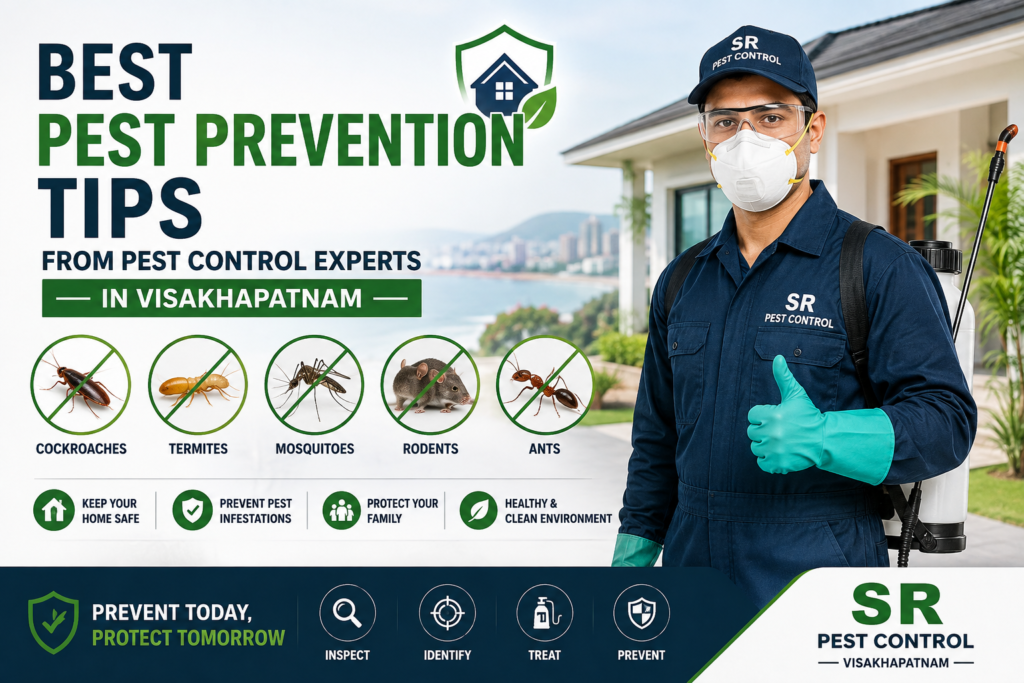
Best Pest Prevention Tips from Pest Control Experts in Visakhapatnam
Pests rarely appear without warning. A few ants around the kitchen, a cockroach seen at night, mosquitoes gathering near stagnant water, or tiny holes in wooden furniture can be early signs of a bigger problem. Once pests find food, water, shelter, and suitable breeding conditions, they can become difficult to control.
For homes and businesses in Visakhapatnam, regular pest prevention is especially important. Keeping your property clean is helpful, but cleanliness alone does not always prevent pests. Small gaps, moisture, food waste, clogged drains, and outdoor vegetation can all create opportunities for insects and rodents to enter.
The good news is that a few simple habits, combined with professional pest control when necessary, can significantly reduce the chances of an infestation.
Here are practical pest prevention tips recommended for homeowners and businesses looking to keep their properties protected.
1. Keep Your Kitchen Clean and Dry
The kitchen is one of the most attractive areas for pests because it provides food, water, and warmth.
Cockroaches, ants, and other insects can be attracted to even small amounts of food residue.
Make it a habit to:
- Wipe kitchen counters after cooking
- Clean spills immediately
- Wash dishes without leaving them overnight
- Empty the dustbin regularly
- Clean underneath appliances
- Keep food preparation areas dry
- Avoid leaving uncovered food on countertops
Pay particular attention to corners and areas behind refrigerators, ovens, and cabinets, where food particles can accumulate unnoticed.
2. Store Food in Airtight Containers
Open packets of rice, flour, cereals, snacks, sugar, and other groceries can attract ants, cockroaches, and pantry pests.
Instead of leaving food in opened packets, transfer it into properly sealed containers.
This simple step helps reduce access to food and also keeps your kitchen more organized.
3. Don’t Allow Water to Collect
Standing water is an important breeding opportunity for mosquitoes.
Check areas around your property where water can collect, including:
- Flower pots and trays
- Buckets
- Drains
- Terrace corners
- Outdoor containers
- Coolers
- Plant pots
- Unused equipment
After rain, inspect your outdoor areas and remove unnecessary water accumulation as soon as possible.
4. Fix Leaking Pipes and Taps
Moisture can make a property more attractive to several types of pests.
Leaking taps, pipes, sinks, and bathroom fixtures can create damp areas where pests find water and shelter.
If you notice persistent moisture under a sink or around a bathroom, don’t ignore it. Repair the leak and allow the area to dry properly.
5. Keep Drains Clean
Kitchen and bathroom drains can become sources of unpleasant odours and may attract insects when they contain food particles, grease, or organic waste.
Clean drains regularly and make sure wastewater flows properly.
If you notice frequent insects around a particular drain, it may be worth having the area inspected instead of simply treating the visible insects.
6. Seal Cracks and Entry Points
Pests don’t need a large opening to enter your home.
Cockroaches, ants, spiders, lizards, and rodents can enter through small gaps around:
- Doors and windows
- Plumbing pipes
- Electrical conduits
- Walls
- Cabinets
- Ventilation openings
- Drainage areas
Inspect your property periodically and seal suitable gaps with appropriate materials.
Door sweeps and properly fitted window screens can also help reduce unwanted entry.
7. Manage Garbage Properly
An uncovered or overflowing dustbin can quickly attract pests.
Use bins with tight-fitting lids and dispose of household waste regularly.
For commercial properties such as restaurants, shops, hotels, and offices, waste management becomes even more important because food waste can attract cockroaches, flies, ants, and rodents.
8. Keep Your Garden and Outdoor Areas Maintained
A well-maintained garden can make your property less attractive to unwanted pests.
Trim overgrown plants, remove dead leaves, and avoid allowing vegetation to grow directly against exterior walls.
Also check outdoor storage areas regularly. Stacked cardboard, unused materials, wooden pieces, and clutter can provide hiding places for insects and rodents.
9. Don’t Ignore Early Signs of Termites
Termites can cause damage quietly, particularly in wooden structures and furniture.
Look for possible warning signs such as:
- Hollow-sounding wood
- Damaged wooden surfaces
- Small holes in timber
- Mud tubes around walls or foundations
- Doors or windows becoming difficult to close
- Discarded wings near windows or lights
If you suspect termite activity, professional inspection is usually more useful than simply treating the visible area. The source of the infestation needs to be identified.
10. Reduce Indoor Clutter
Dark, undisturbed spaces can provide hiding places for cockroaches, spiders, rodents, and other pests.
Try to avoid unnecessary piles of:
- Newspapers
- Cardboard boxes
- Old clothes
- Unused furniture
- Packaging materials
- Broken household items
Keep storage areas organized and inspect them periodically.
11. Wash Pet Bowls Regularly
If you have pets, food and water bowls can sometimes attract ants and other insects.
Clean bowls regularly and avoid leaving leftover pet food exposed for long periods.
Also keep the area around pet feeding spaces clean and dry.
12. Use Window and Door Screens
Windows and doors provide easy entry points for flying insects.
Properly fitted mesh screens can help reduce the entry of mosquitoes, flies, and other insects while still allowing ventilation.
Check screens periodically for holes or loose edges and repair damaged sections.
13. Don’t Depend Only on DIY Pest Control
Home remedies and commercially available pest products may be useful for minor situations, but they may not solve an established infestation.
For example, killing a few cockroaches does not necessarily mean the infestation has been eliminated. Similarly, treating visible termite damage without finding the source may leave the underlying problem untouched.
Professional pest control can help identify the type and extent of infestation and determine an appropriate treatment approach.
14. Schedule Pest Inspections When Necessary
You don’t always have to wait until you see dozens of pests before taking action.
An inspection can be particularly useful when:
- You repeatedly see cockroaches
- Ant activity keeps returning
- You notice termite warning signs
- Rodent droppings appear
- Bed bugs are suspected
- Mosquito activity remains high
- Pests are affecting your business
- Previous treatments have not solved the problem
Early attention can make pest management easier and may help prevent the problem from becoming more extensive.
15. Follow Professional Treatment Instructions
If your property receives professional pest control treatment, follow the technician’s instructions carefully.
Depending on the treatment, you may be advised to keep children or pets away from treated areas for a specified period, clean or avoid certain surfaces temporarily, or make other preparations.
Don’t assume that using more pesticide will produce better results. Pest control products should always be used according to their label directions and professional guidance.
Pest Prevention Is Better Than Waiting for an Infestation
Good pest management is not about reacting every time you see a cockroach, mosquito, ant, or rodent. It is about making your property less attractive to pests and identifying problems early.
Regular cleaning, proper food storage, moisture control, waste management, sealing entry points, and maintaining outdoor areas can all contribute to better pest prevention.
However, if pests keep returning despite your efforts, professional help may be the better option.
Professional Pest Control Services in Visakhapatnam
For homeowners and businesses looking for Pest Control Services in Visakhapatnam, SR Pest Control provides pest management solutions for different types of properties.
Services include:
- Cockroach Control
- Termite Control
- Mosquito Control
- Rodent Control
- Bed Bug Control
- Ant Control
- Spider Control
- Lizard Control
The team provides pest control solutions for homes, apartments, villas, offices, hotels, restaurants, shops, warehouses, and other properties.
If you are noticing recurring pest activity or want to take preventive measures before an infestation becomes serious, getting a professional assessment can be a practical next step.
Contact SR Pest Control: +91 9121835368
Email: rameshmy20@gmail.com
Frequently Asked Questions
How can I prevent pests in my home?
Keep food sealed, clean spills quickly, control moisture, remove standing water, manage garbage properly, reduce clutter, and seal potential entry points.
How often should pest control be done?
There is no single schedule that works for every property. The appropriate frequency depends on the pest type, infestation level, property conditions, and previous treatment. A professional inspection can help determine a suitable schedule.
What attracts cockroaches to a house?
Food crumbs, grease, moisture, leaking pipes, uncovered garbage, clutter, and accessible food sources can all make a property more attractive to cockroaches.
How can I reduce mosquitoes around my property?
Remove standing water, keep drains clear, maintain outdoor areas, and prevent water from accumulating in containers, plant trays, and other locations.
When should I call a professional pest control company?
Consider professional pest control when pests keep returning, the infestation is spreading, you notice termite or rodent signs, or DIY methods are not providing a lasting solution.
Final Thoughts
A pest-free home doesn’t happen by accident. Small preventive habits can make a meaningful difference, particularly in areas where warm and humid conditions can encourage pest activity.
The key is to prevent what you can, identify problems early, and seek professional pest control when the situation requires it. With the right approach, you can protect your home or business and make it less welcoming to unwanted pests.